

Paul Lindsay Dawson’s talk: “Rev. William Turner and the Railways”

David Warhurst writes:
“Celebrating 200 Years of the Stockton and Darlington Railway!
On 27th September 1825, a steam-hauled passenger train ran on the new Stockton and Darlington Railway, from Shildon via Darlington to Stockton, a distance of 26 miles to great acclaim. This is credited worldwide as the beginning of passenger railways as we know them (more on this later). This year marks the 200th anniversary of that great achievement of which, rightly so, we are very proud in the north east. So, we have been celebrating with numerous events culminating with a re-enactment of that first journey by running a replica of the 1825 train on the same route over three days from 26th to 28th September.
The train was hauled by a 50-year-old replica of the first engine, Locomotion. This was made for the 150th Anniversary Cavalcade in 1975 at which Hazel and I were present. It’s now a classic in its own right and performed faultlessly throughout the run, which ended on an embankment adjacent to Roseworth Park, where we, and hundreds of spectators, had a great view of the train in a really festive atmosphere.
BUT… was it really the first steam-hauled passenger train?
In a fascinating talk on 22nd October at the Newcastle Lit and Phil, Paul Lindsay Dawson, of Wakefield Westgate Unitarians, revealed what some of us already knew, that the Stockton and Darlington Railway was beaten to it by the Middleton Railway in Leeds which commenced steam-hauled operations in 1812 – 13 years before the Stockton and Darlington Railway!
Even more amazing, and not known to most of the Unitarians present at the talk, including me, is what Paul revealed; that the Middleton Railway was largely engineered by Wakefield and Leeds Unitarians John Blenkinsop and Matthew Murray. Rev. William Turner, brought up in Wakefield, was inspired by this and went on to minister to Newcastle Unitarians in Hanover Square. His congregation included many members who had interests in coal mining, as well as science and technology. For example, John Buddle, perhaps the foremost colliery owner of his age who was involved with the development of early railways in Britain and overseas, and George Stephenson and his son, Robert. Rev. Turner inspired his congregants like Buddle and Stephenson to get on with it!
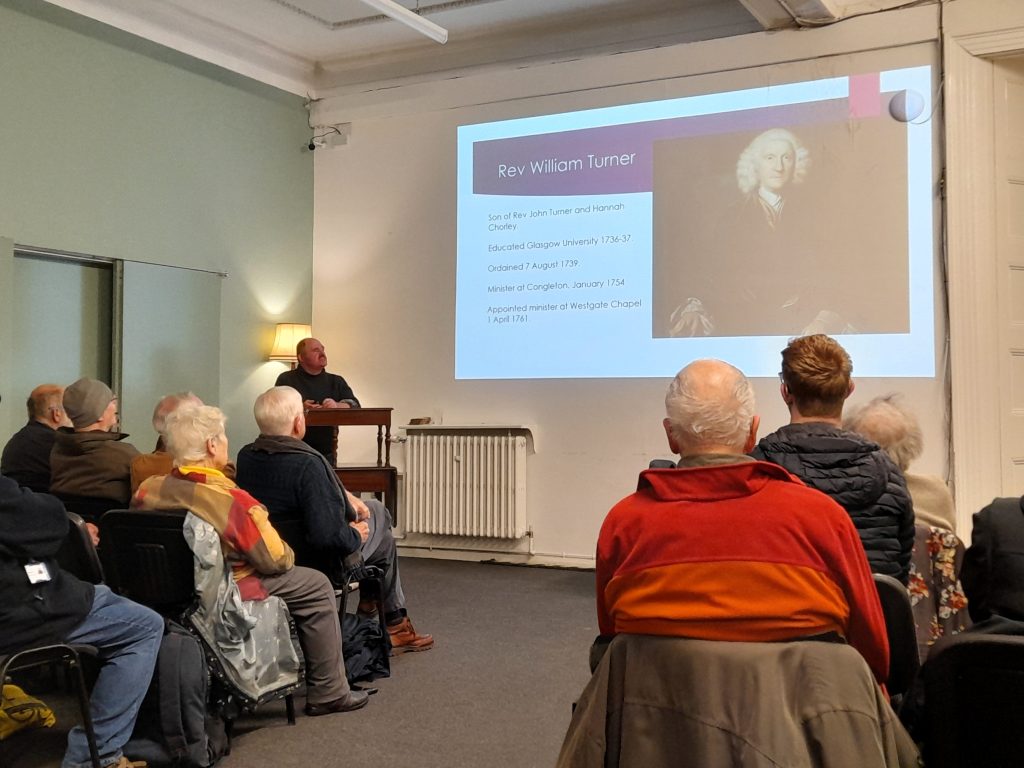
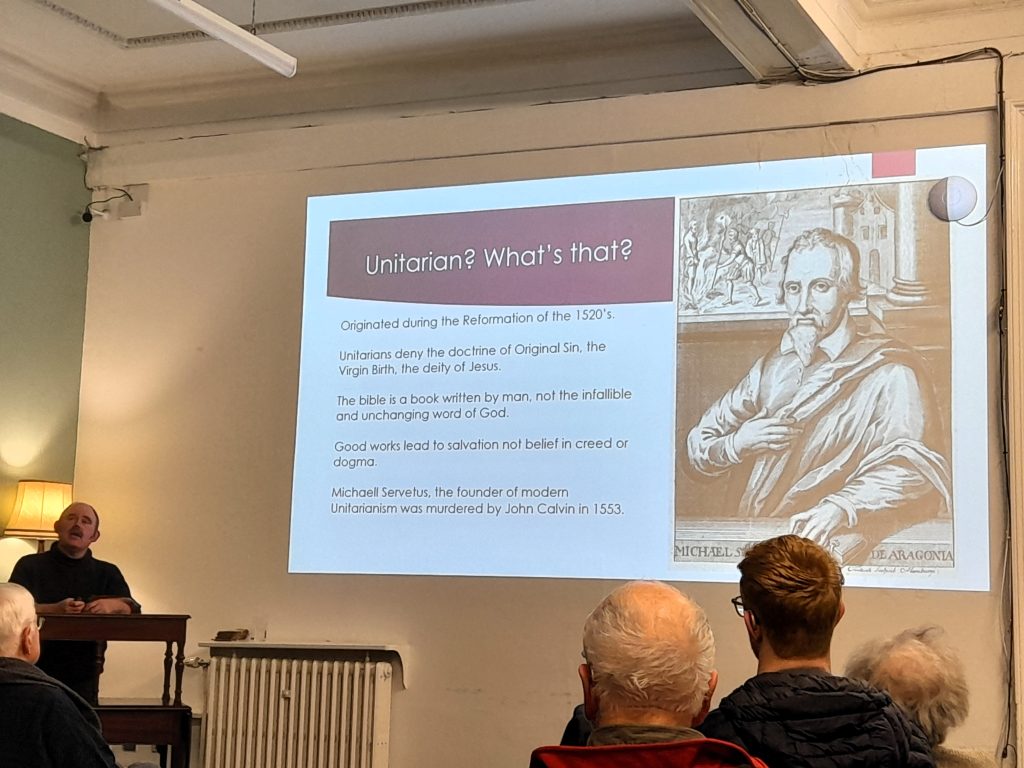
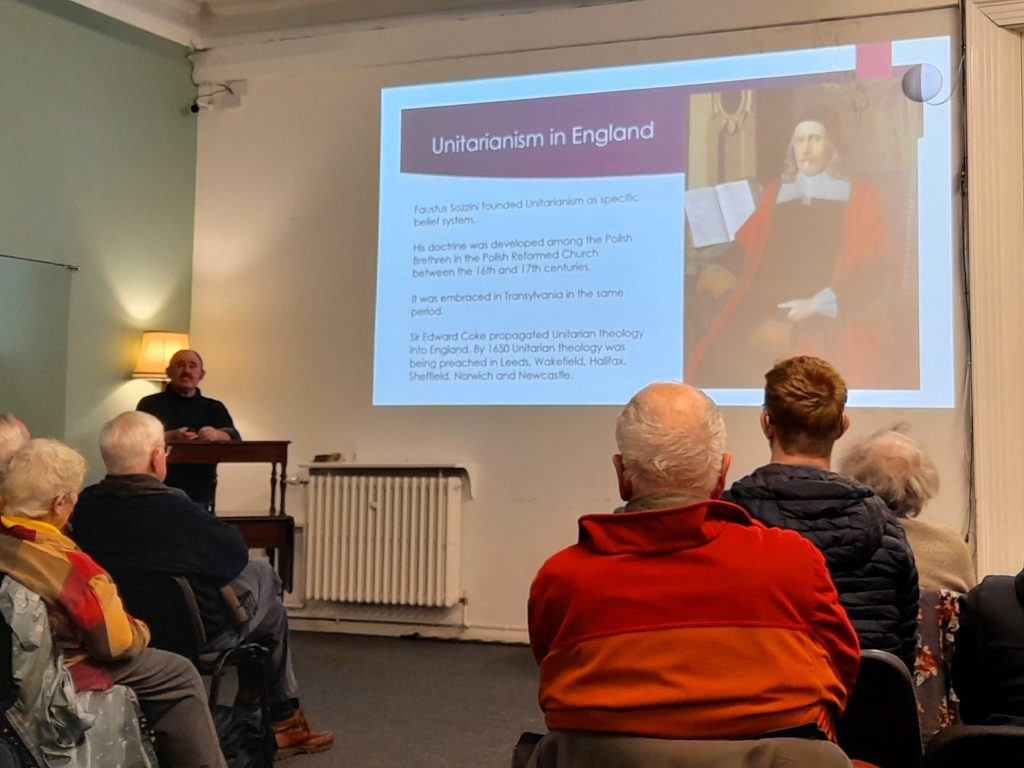
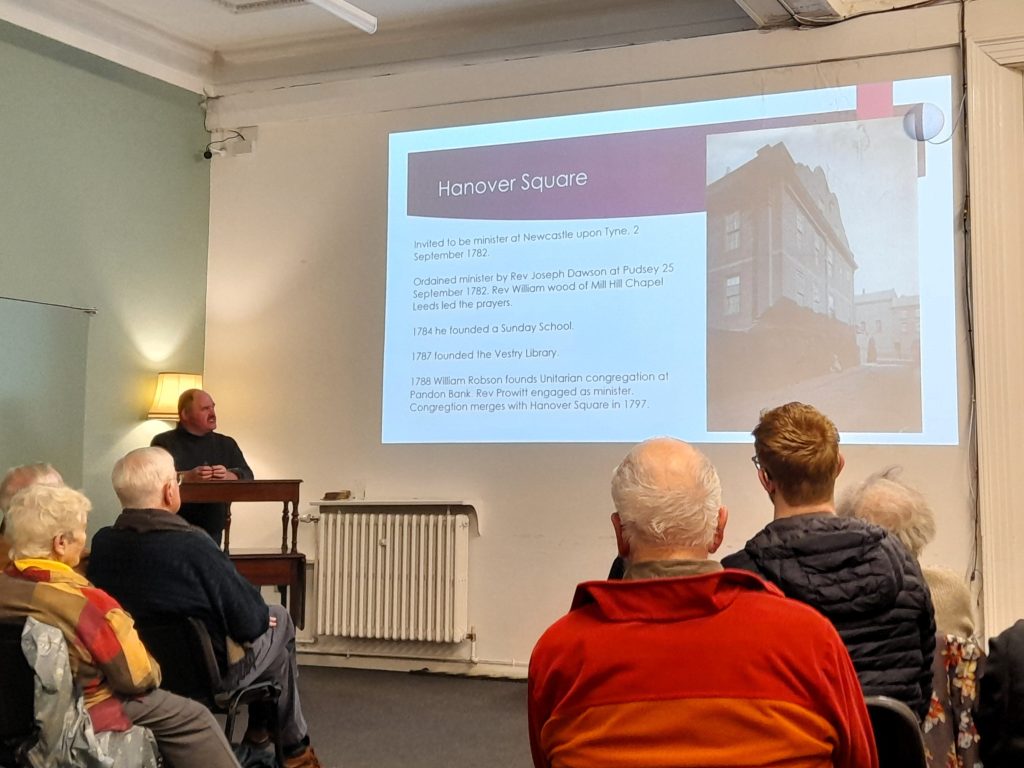
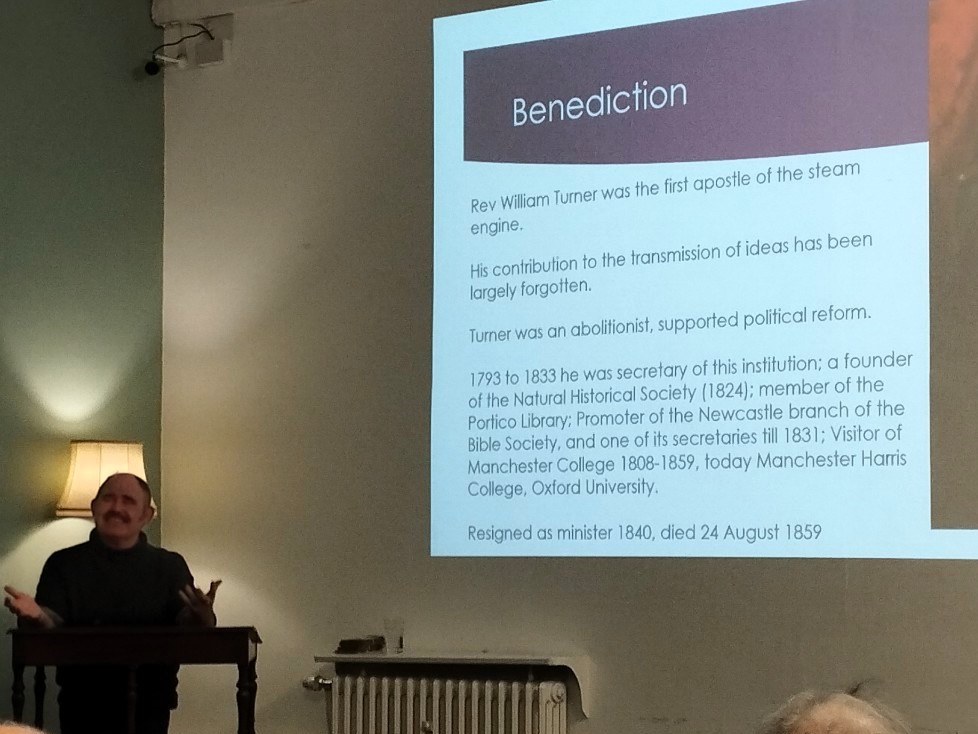

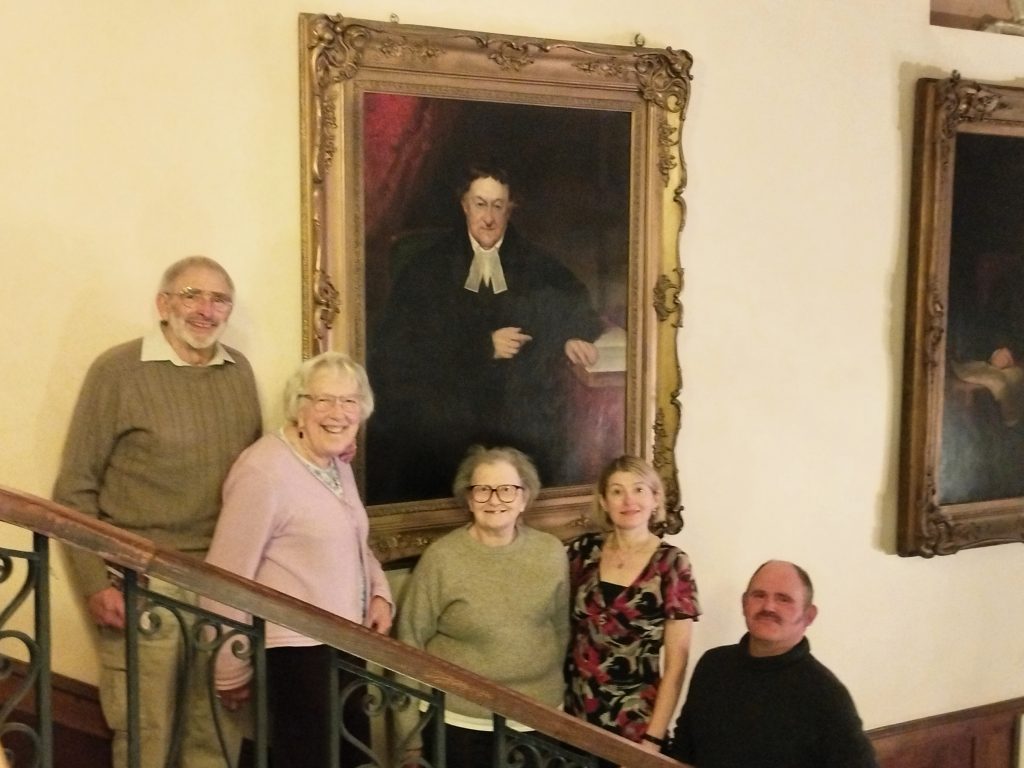
So, we now know that Unitarians were pivotal in the development of the railways but why have we not heard of this before now? The answer, said Paul, is that another engineer of the day, Timothy Hackworth, who learned his trade with Stephenson and went on to become the Stockton and Darlington Railway Locomotive Superintendent, was a devout Wesleyan Methodist. After his death his family pursued a relentless campaign to claim many of the key inventions for Hackworth and, in particular, to erase all mention of the part played by ‘heathen’ Unitarians from the history books, with so much success that I haven’t found any reference to Unitarians in any of the writings about the early railways, whereas the part played by Quakers such as the Pease family, and Methodists like Hackworth are frequently mentioned.
It’s high time that we put the record straight and shouted from the rooftops about our great Unitarian engineering ancestors! Let’s hope Paul’s excellent and entertaining lecture has set the ball rolling.”
David Warhurst
