

Interfaith Sabbath Service, Friday 24 January 2025

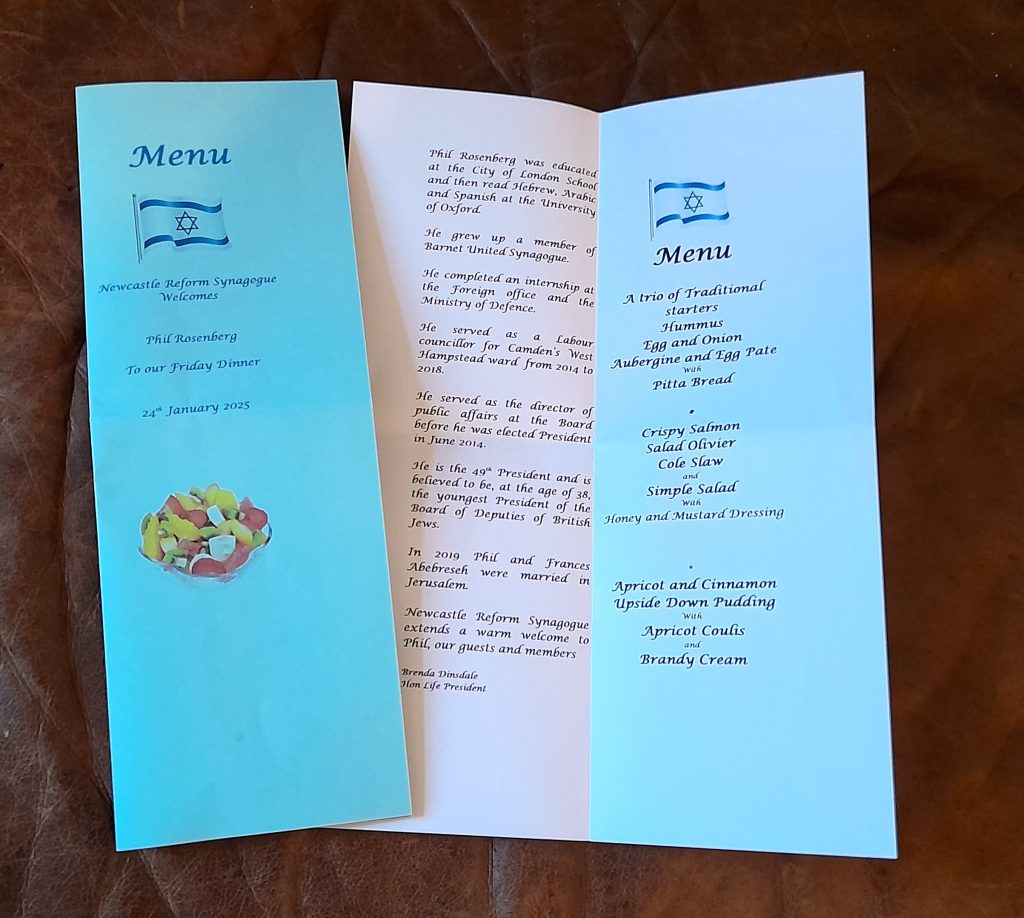
Some time back, when Newcastle upon Tyne Unitarians were looking for a potential new home, we considered building links with the Newcastle Reform Synagogue. In the US, Unitarian Universalism and Reform Judaism have strong links, and both faiths share liberal and progressive approaches to the spiritual life. As it was, we have settled at the Spiritual Commons Room in Northumbria Student Central, but it was a pleasure to receive an invitation from them. On 24 January 2025, the council of the Newcastle Reform Synagogue invited members of other local religious and spiritual groups, and civic leaders, to their Friday night Sabbath service at the Kenton synagogue to hear Phil Rosenberg, President of the Board of Deputies of British Jews (the largest and second oldest Jewish communal and representative organisation in the United Kingdom), speak about the work being done by the Board of Deputies to tackle antisemitism in the UK, participate in the service, and join the congregation for a meal afterwards. It would prove a thought-provoking experience in how religious freedom works, and doesn’t, in the UK.
The synagogue is a large and pleasant building, a welcome sight on a night in which the UK suffered the sort of weather warnings which cause most people to dive indoors and hide under the duvet. The differences between how we experience our religious faith and what others in our own country experience were right there from the start; Unitarian congregations do not generally need to have a security officer on the door, nor do our noticeboards in the entrance hall have advice on how to spot someone acting suspiciously near the building. Lest this sound paranoid, a quick look at the rise in antisemitic incidents in the UK in 2024 will soon indicate it is not, and that ‘religious freedom’ operates differently for some of us here in Britain than for others, sadly.
Once through the door, we were made very welcome by the congregation, a member of whom sat with us and guided us through the service. Reform Jewish congregations pray in a mixture of Hebrew and English, and their prayer books have the prayers in both languages along with a clear explanation of the prayer, its context and meaning. We could learn from this – a thought that kept repeating itself for me throughout the evening.
As I write this, I’ve found myself asking ‘do Jewish religious communities call themselves congregations?’ ‘what’s the right word for a book used in Jewish services?’ ‘do you call the songs hymns, or is that a Christian term?’. Being in a religious community where everyone else knows what’s going on, what the right words to use are, and the general way things are done, when you yourself don’t, is an experience those of us who are serious about saying ‘all are welcome’ should have, because it’s an eye-opener for those of us who turn up every Sunday to a warm Unitarian familiarity. (You’ll note that there are few photographs here, unlike my usual writings and despite the beauty of the building; it is requested not to take photographs on the Sabbath within the synagogue.) I have to give the Newcastle Reform Synagogue every plaudit for making everyone so welcome, explaining everything so clearly – especially their worship leader, Rabbi Sybil Sheridan – and generally handling the entire event with grace, skill, and warmth. Also for their beautiful singing!
Needless to say, my personal musings were not the point of the evening, and Phil Rosenberg’s speech was a powerful one. Whilst this gathering was part of the events for Holocaust Memorial Day on Sunday 26th January, he made the very salient point that for many non-Jews, Holocaust Memorial Day and the history associated with it are their main reference point for Judaism in the UK – that, and the ongoing situation in the Middle East. For many of us here in Newcastle (my thoughts, not those of Mr Rosenberg), it would also be the large Orthodox Jewish community in Gateshead, but like our own spiritual movement, Judaism is diverse, with different viewpoints, philosophies and ways of practice within the broader tradition. Obviously, we should never forget history, particularly at a time in world politics when I fear we’re at risk of doing exactly that, but what of the present? As Mr Rosenberg asked, do we truly know our Jewish neighbours, and what can we do to build links between our communities in Britain in 2025?
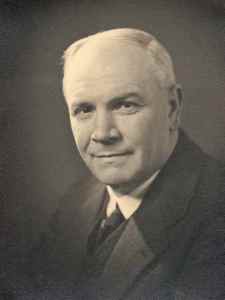
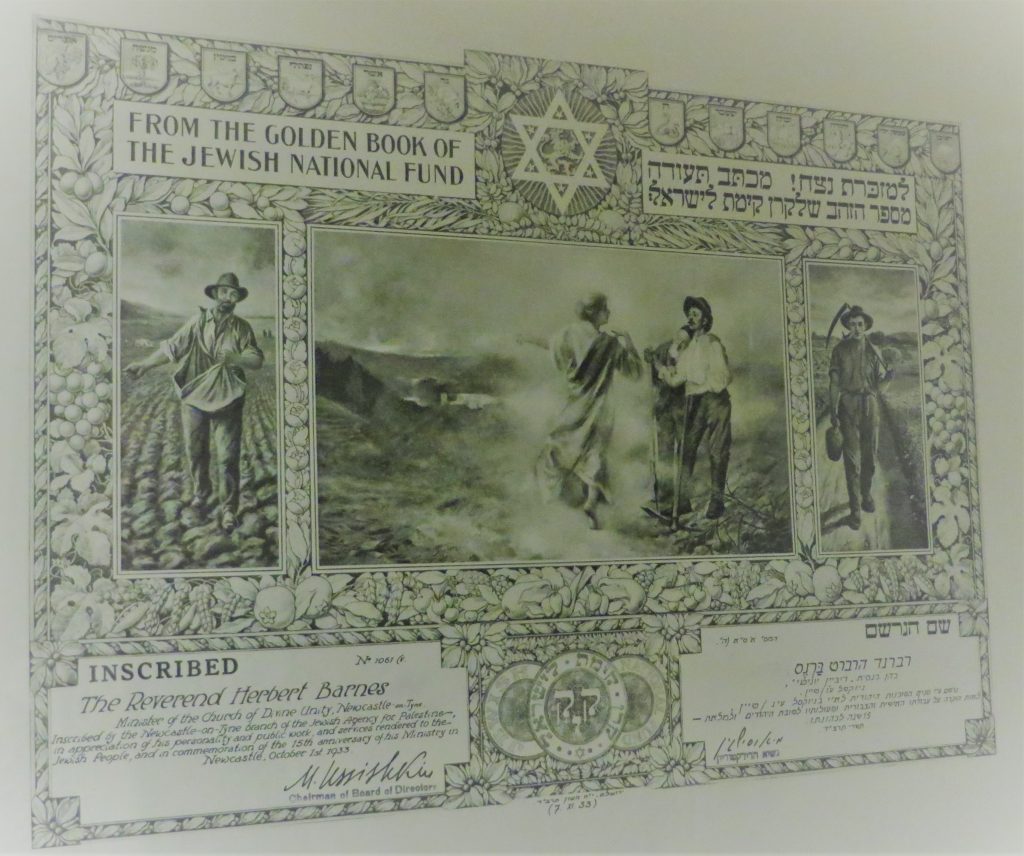
As a member of Newcastle upon Tyne Unitarians, I thought of our own history, in particular, of perhaps our most influential minister of the modern age, Rev. Herbert Barnes (minister between 1919-1951). Among his many other achievements, he took a vigorous stand against anti-Semitism. On 8 January 1934, it was reported that, later that week, ‘in appreciation of his personality and public works and services rendered to the Jewish People’ and in commemoration of the 15th anniversary of his ministry, he was to be honoured by an inscription in The Jewish National Fund’s ‘Golden Book’ and a certificate marking this was presented to him. (The public works referred to included serving on both the Newcastle Public Libraries Committee and Education Committee.) This inscription in the ‘Golden Book’, given on the recommendation of the Jewish Agency for Palestine, was said to be the highest form of tribute Jewish people can pay to those whom they wish to honour. Speeches would be made by Rabbi J. Kyanski and Rev. Emmanuel Drukker from the Jesmond Synagogue. Members of Mr Barnes’s church were invited to the presentation, and it was reported in Rev. Barnes’ obituary in ‘The Daily Journal’ in 1954, that he was ‘one of the few gentiles to have had their names inscribed in the Golden Book’. The certificate is now stored at Harris Manchester College in Oxford. (My thanks to Arthur Andrews at Heaton History Group for these details; his full biography of Rev. Barnes can be found here: Rev. Herbert Barnes.) His memory is a powerful one; what should we be doing in the modern era to carry on his legacy?
The meal itself was lovely. Again, it is always in the details that the texture of life is revealed; we had cold food, because Jewish law prohibits cooking, baking, and starting fires on the Sabbath. As we sat at our meal, we sat near a memorial for hostage Amiram Cooper. An economist and one of the founders of Kibbutz Nir Oz in Israel, he was taken captive by Hamas on 7 October 2023, and his death whilst still being held hostage by Hamas was confirmed on 3 June 2024. Synagogues across the world have adopted hostages, praying for them and their wellbeing since 7 October 2023, and remembering those who died without being freed. A sharp reminder to all of us that what to many of us is a “complex moral issue”, is to others an ongoing horror, a reminder of what has happened in the past and happens now, and that when we discuss such situations, we should be mindful that this is not a theoretical exercise, but a lived experience.
Yet at the same time, there was music, companionship, food and laughter. We joined together for hours, Jewish, Christian, secular, Muslim, Hindu, and many more. I was struck also by how similar we all are. Jewish congregations also love singing, have concerns about how we can provide for the spiritual needs of the younger members and not have them leave when they become teenagers, and are well aware that it’s a bad idea to keep the congregation from their food. (Also, that if you ever want to start a conversation in any religious community anywhere in the UK, ‘how’s the parking situation?’ will work pretty much every time.) I thought of our own past, and the I don’t know what our future together holds, although I can’t help thinking that reviving the Newcastle Peace Walks would be a good start. Many thanks to all involved for hosting a wonderful event.
