

Accepting ourselves, whatever we are
Rev. Roger Tarbuck writes: “Some people are born to excel, others are born not to be the captain, but the first lieutenant or just an able seaman, or even an unable seaman. But it’s fitting that we should start life with our eyes glittering in the starlight, though many will fail; andin later life how painful it may be when we discover the hard facts. Many defiantly say, “I never give in”, while others need to say, “Face it, Matey, you’re not up to it.” We realise that we have to accept ourselves and make the best of things. Not always an easy thing to do.
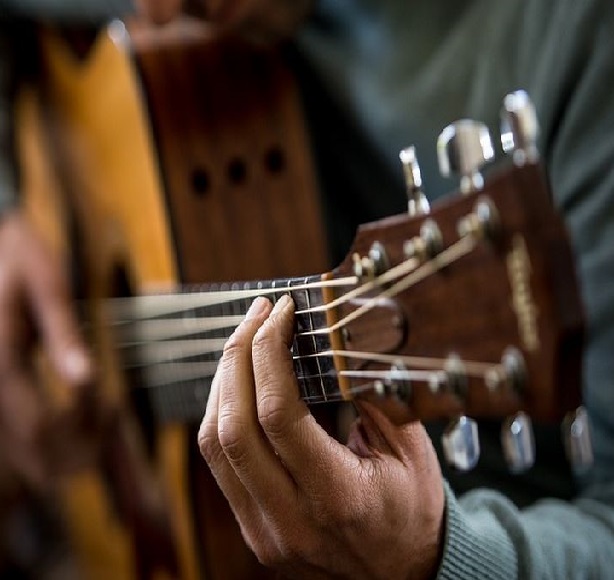
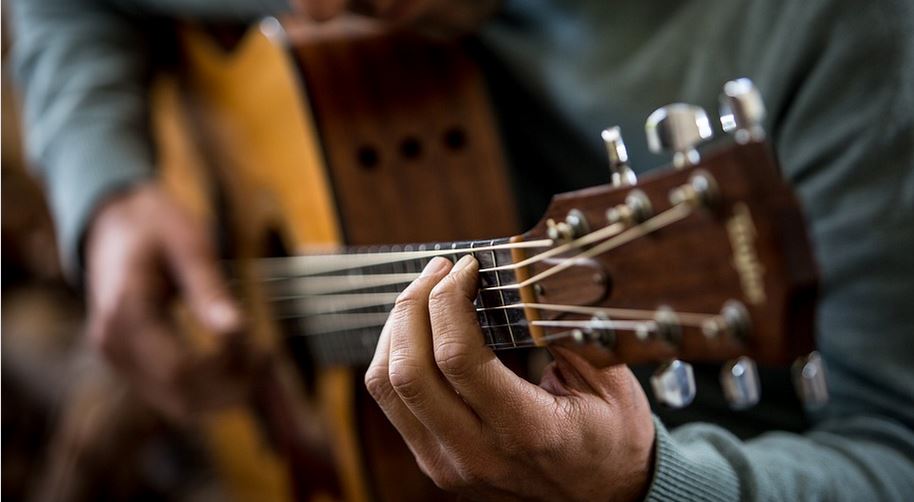
I play the guitar – but not really: I bought my first instrument sixty years ago, but because I don’t have any kind of talent, I’ve never played well, though I’ve enjoyed myself enormously. I can’t even play badly. People are born with certain talents, but I now know that, even with a good teacher, I could never have been even a rotten player. All this is about the classical guitar, and I’ve no idea of how to strum a popular tune – you know: “plonk-a-plonk-a-plonk” – not even that. A friend once picked up my instrument and easily plonked a few popular songs – with brio! He said that he’d never had a lesson. Hmm. How did he know where to put his fingers?
I admit it was a simple picking out of the tune with his right thumb on the base notes and a rub-a-dub-dub with those fingers on the related chords, but how on earth did he know where to put his left-hand fingers? Anyway, he entertained us well enough. We’re all born with some form of talent and we should make the most of it. It may be a very poor talent, like mine (and you don’t strew it around) but, if it gives you half the pleasure that I get from my guitars, keep at it.
Then, when you know that you’ll never be a great musician – or even a rotten one – don’t give up and throw your guitar out of the window (it does happen), but forget the wild dreams and concentrate on what you really can do, and it can be fun. In this vein, I made a happy discovery sixty years after buying my first guitar.
I have a stack of printed music – quite embarrassing, really, and some of it is very advanced. But for all those sixty years of dabbling and dreaming, I never really progressed – starting something, quickly getting bored and starting something harder and more beyond me than ever. About twenty years ago, I bought a book called “Fifty Easy Classical Guitar Solos”, with a CD performed by Jerry Willard. I nibbled at the book a little, but lost interest in it when I mislaid the CD. Then last year, I chanced upon the CD among my pile of discs, and I really listened to it, book in hand.
This book and CD are remarkable – fifty short, delightful pieces by classical guitar composers from 1600 to 1900: real music, from names like Sor, Carcassi, Giuliani, Tárrega, etc. I really should be able to play the little pieces (first year stuff) and I don’t care if I never attempt more advanced music. Small really is beautiful, but small and simple still requires effort. Years ago, when I first tried them, many sounded like jumpity-jumpity tunes, rather like skipping or nursery marching songs. In other words, I thought that they weren’t good enough for me.
Now that I’m older and wiser, I realise that the jumpity-jumpity bit was entirely mine, because the professional playing of Jerry Willard brings home to me the seriousness of all the little pieces, written by master composers for people with the self-knowledge, humility and tenacity to steep themselves in the music, and not dabble idly around, as I did for so long. Concentrate on what you can do, and it can be fun. In this vein, I made a happy discovery sixty years after buying my first guitar.
It’s the joy of simplicity. In my case, it was discovering real musical depth in what I thought of as beginners’ pieces, not worthy of my attention, as I sailed on, dreaming of being another John Williams. I even heard John Williams himself say, “Stop messing about with what’s too hard for you. Play single notes and really try to do it well.” Of course, this didn’t sink in with me at the time, but better late than never. Now I can see my musical experience all of a piece with my life generally – for example, worrying that I haven’t done much with my career compared with Doctors without borders, for example. Or compared with other ministers? Oh, dear!
But my perception of the power and beauty of simplicity started when my friend Ted was very ill and I said, “I wish I could do something for you, Ted.” He pointed at me and replied, “You’re there! That’s what counts.” God bless you, Ted. Your words will always be with me. Looking back now, I can see the times when I could have done better, at no cost to myself. Just being “there” is sometimes all that is needed.”
Roger Tarbuck, January 2021

I quite agree, Roger. From adolescence we seem to be discouraged from undertaking music, art, writing, indeed all creative activities, unless we have talent for a particular one. (Thankfully) the same attitude is not generally taken with children, or indeed with adults participating in other types of recreation eg sport/going to the gym. Yet surely doing something creative can also be enjoyable and good for our wellbeing, irrespective of age and the level of talent each of us has?
And, by the way, from what I saw in Newcastle, you did plenty of good with your career as a minister!
Thank you, Stephen. It means a lot to me having this contact after so many years of friendship, both spiritual and non-spiritual. I send my good wishes to all of you.
God bless,
Roger