

The 83rd Anniversary Service

This is an extract from Louise Reeve’s Anniversary Service on 15 January 2023
This service takes place on a Sunday near to 21st January every year, to celebrate the anniversary of our building’s opening, on 21 January 1940. In this year’s anniversary service, I thought it would be interesting to reflect on some of the objects in and around our unique home.
I still do intend to do that, but first, I must acknowledge a sad loss. I think that I have managed to speak to most of you about this, my apologies to anyone I have not reached. Our former Chairperson and Secretary for many years, and one of the longest-standing and hardest working members of our congregation, Maurice Large, died at the start of this week. He will be hugely missed by all who knew him. His dedication to Unitarianism, great wisdom and good heart were apparent to everyone who knew him.
We are waiting to hear from his family when the funeral service will take place – I will keep everyone informed. We will also have a memorial service for him in due course, both online and in person, so that our congregation and members of the wider Unitarian movement who knew him can gather together to remember his life. Later in the service, we’ll have Candles of Joy and Concern, and if anyone does want to share memories of Maurice or thoughts about him at that time, you are welcome. I have brought a card for us to sign, and we will arrange to send flowers. This week I will email and write to anyone we have not managed to contact, to make them aware.
With that in mind, I have rewritten this service a little to begin with an extract from Maurice’s address in 2020, “The Uniqueness of Our Building”.
1st Reading – ‘The Uniqueness of Our Building’ from Maurice Large’s address in 2020
This is an extract from Maurice Large’s address at the 80th Anniversary Service in 2020.
“All sorts of things were happening in 1940. In January, Britain had been at war with Germany for almost five months. Food rationing had been introduced on January 8, and in June there was a by-election for Newcastle North. The new MP was Cuthbert Headlam, who held the seat for the Conservative Party until 1951. That same year on February 10th, Tom and Jerry made their debut in cinemas. And in Newcastle upon Tyne, on 21 January 1940, we opened our new monumental church.
Maurice Large comments: ‘Apart from local newspaper reports, the first reference in literature I can find to our building is in a book by Sydney Middlebrook called ‘Newcastle upon Tyne – Its Growth and Achievement’, published in 1950. He states:
“The present Church of the Divine Unity in Ellison Place, one of the most interesting recent buildings in the city ….. was built from the plans of Messrs Cackett, Burns, Dick and MacKellar, and was formally opened on 21 January 1940.”[i]
Our building also gets a mention in a book published in 1986: ‘The Unitarian Heritage – An Architectural Survey’, as follows:
“A church of 1940, built during the long and fruitful ministry of Rev. Herbert Barnes. A very large building… the bright pastel colours of the decor, impressive beamed ceiling, rectangular ‘Art Deco’ design of the chancel, and period window glazing make this interior unique among Unitarian churches, possibly among all British churches.”[ii]
Descriptions often mention our wood furnishings. If you look into the Church Hall, particularly if you look down from the gallery, you cannot fail to be impressed by a sea of light oak, with elegant wave patterns repeating throughout – from the doors, down the ranks of pews and into the chancel with the pulpit, reading desk and choir stalls, a gift to the church in memory of Beatrice Barnes, Herbert Barnes’ wife, who died shortly before the building opened.
We have also got a page to ourselves in the Twentieth Century Society’s ‘100 Churches, 100 Years’, published in 2018. But the most all-encompassing description of the building is not in print. On 31 May 2015, Rev. Cliff Reed came to Newcastle to take a service for us, bringing with him his wife Paulette, who had never been here before. I (that’s Maurice Large) gave her the guided tour and showed her into the church, and she paused, took in the simple lines of the building, the rectangular pattern on the back wall and the pale oak furniture and said only one word: ‘Wow!’”
Object 1 – The Durant Stone
With that in mind, I’d like to draw our attention to the first object, which is not in this room for obvious reasons! It’s the Durant Stone, aka the gravestone of one of our two founders, Rev. William Durant, and can be seen in the church vestibule. Here is a little about him from Tyne and Wear Archives and Museums:
“The Church of the Divine Unity may claim to be the oldest of the nonconformist congregations in Newcastle. Its first two ministers, Durant and Gilpin, were both ejected in 1662, the one from All Saints Church, Newcastle, and the other after refusing the bishopric of Carlisle. The exact date of formation of the congregation is unknown, although it seems that Durant held religious meetings in his own house in Pilgrim Street before 1672, when he and his Society secured a licence to hold services in a meeting-house in the Close. On Durant’s death in 1681 the congregation was then ministered to by Dr Gilpin, who may already have had his own congregation, meeting in a building in Castle Garth. The exact tenets of the faith proclaimed by Durant and Gilpin are imprecisely known, and it would appear that it was the next pastor, Benjamin Bennett, who established the congregation firmly on Unitarian lines.”
Maurice Large comments in his history of our ministers:
“William Durant first appears in Newcastle in 1645, shortly after the town was captured by the Scots and Charles I was held captive (there is a plaque on the wall of Lloyds Bank in Market Street, Newcastle which commemorates this event). The board in the church’s vestibule records William Durant as our minister from 1672. This is, however, certainly wrong! He lived in Pilgrim Street and had for many years worked in the churches of Newcastle. It is not credible that he did nothing for over ten years after his ejection. 1672 is the date when he received a licence to preach as a non-conformist (or in other words his activities became lawful). But there is much to his life before then. He did not remain alone in Newcastle for long. Richard Pringle, having been ejected from Eglingham, and Richard Gilpin, having resigned his living in Greystoke, Cumberland, soon moved to Newcastle, and Henry Leaver moved back after three years. These four preachers formed the nucleus of what was to become the Nonconformist witness in Newcastle.
By 1668 these four preachers were becoming of considerable concern to the Bishop of Durham, John Cosin. He complained that the civic authorities were allowing unlawful conventicles (meetings for religious worship) led by them to proceed without sanction. After complaining about a meeting on 1st November 1668 he continued with information of a second meeting on 25th November and specifically names Durant, Gilpin, Pringle and Leaver as “the four chief leaders and abettors”.
Following further warnings from the Bishop, the town authorities acted. In late July 1669 the town sergeant broke up a meeting at Durant’s house in Pilgrim Street at which 150 people were present, and, a couple of weeks later, a meeting at Gilpin’s house (near where Hanover Square Chapel later stood). The information laid before the town magistrates named Richard Gilpin, William Durant, Henry Leaver and Richard Pringle as the preachers and also present were four past sheriffs, four ex-mayors, one future mayor, some of the aldermen, the town’s physician, the town surveyor, and about thirty other well-to-do burgesses, with, in some cases, their wives. No wonder the magistrates had been reluctant to enforce the law!
William Durant died in 1681 and having been ejected from the Church of England was denied burial in consecrated ground. He was therefore buried in the garden of his house in Pilgrim Street – the exact site, as near as I can ascertain, being where the Tyneside Cinema now stands.”
Object 2 – the Choppington Miners’ Lamp
We now take a big leap forward in time, to consider the Choppington Miners Lamp. You may at this point be thinking that I’ve skipped over some rather large chunks of our history. Where, for example, is Rev. William Turner, the much revered minister, thinker, and anti-slavery campaigner? What about the other founder of our congregation, Richard Gilpin, or Benjamin Bennett, who established us as Unitarians? The short answer is, they deserve a service to themselves – and in future we shall hopefully have exactly that. For now, though, I’d like to look at a rather unusual chalice.
This next extract from our history was written by myself and Maurice based on several discussions we had between us.
 “Choppington Chapel (1868-1970) was one of several former Unitarian congregations in the North East, and was known as the ‘Chapel of the Miner’s Lamp’. Choppington was a mining village, and their custom of hanging a lit miner’s lamp in the chapel when services were taking place predates the adoption of the chalice as the Unitarian symbol. Newcastle upon Tyne Unitarians inherited the miner’s lamp when Choppington Chapel closed in 1975 – along, it would seem, with the collection plates!
“Members of the congregation may have seen the name ‘John Carr 1868-1936’ etched into one of our collection plates, but who was John Carr? Maurice Large did some research: “The registers don’t go back to John Carr’s birth of 1868, but we have a register of deaths which shows he lived at 4 Benwell Grange Terrace, died on 27 May 1936 and was cremated at Newcastle, with the service being conducted by Rev. Herbert Barnes. The significant information in the entry is “Old member of Choppington”, and I surmise that maybe those collection plates came from Choppington Chapel when it closed in the ‘60s. It may not be a coincidence that Mollie McIntyre’s brother, sometime secretary of Choppington, was called Hugh Swinburne Carr.”
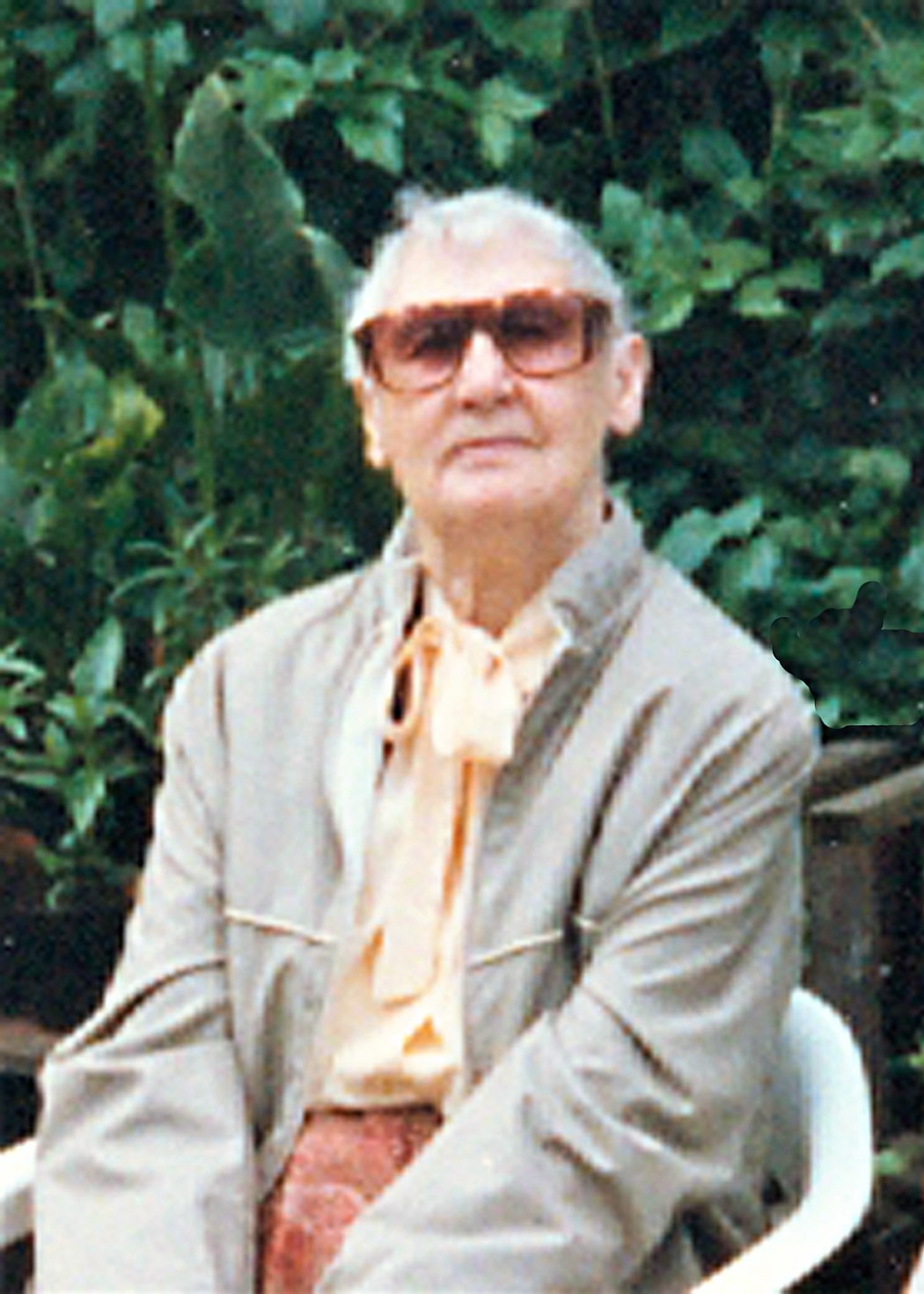 Who was Mollie McIntyre? You may have seen her photograph in the vestibule. Here’s Maurice Large again:
“Mollie McIntyre was Hugh Swinburne Carr’s sister. After Choppington Chapel closed, Mollie (correct name Mary Indiana McIntyre) was a regular at the Newcastle Unitarian Church. She died in 2008 with no family to leave her estate to, so she left it all to the church. She had always led a very frugal life, so we were astonished to receive a very sizeable sum! Without Mollie’s generosity, we would probably have had to close.”
People may also be interested to learn that the only female minister on our ministerial role, Rev. Lillian Scott Preston, was the Minister of Choppington church; she is also listed here, as at one point she was the assistant Minister alongside Rev. Herbert Barnes, of whom more shortly.
Object 3: Rev. Herbert Barnes’ Certificate of Entry in the Golden Book
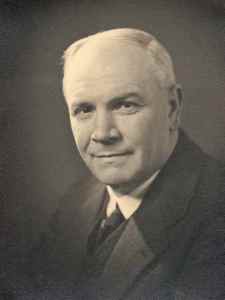 Going back a little in history, we arrive at Rev. Herbert Barnes, the Minister during whose tenure this building was built. At this moment in time I’d like to focus upon his vigorous stand against anti-Semitism during the 1930s and 1940s.) He was forthright in his defence of those whom he believed wronged, often using his weekly column in the Newcastle Chronicle to highlight the plight of Jewish people facing persecution in Germany in the 1930s – here is a quote from an article written in April 1932, just as the Nazi persecution of Jews began: “When will we learn to level these barriers to brotherhood, to see men just as men, to judge them by what they are, and not by the racial name they bear?”
A local historian, Arthur Andrews, of the Heaton History Group, writes:
“On 8 January 1934, it was reported in the Newcastle Chronicle that, later that week, ‘in appreciation of Herbert Barnes’ personality and public works, and services rendered to the Jewish People’ and in commemoration of the 15th anniversary of his ministry, he was to be honoured by an inscription in the Jewish National Fund’s ‘Golden Book’ and a certificate marking this was to be presented to him.
The public works referred to included serving on both Newcastle Public Libraries Committee and Education Committee. This inscription in the ‘Golden Book’, given on the recommendation of the Jewish Agency for Palestine, was said to be the highest form of tribute the Jewish people can pay to those whom they wish to honour. Speeches would be made by Rabbi J. Kyanski and Rev. Emmanuel Drukker from the Jesmond Synagogue. Members of Rev. Barnes’s church were to be individually invited to the presentation. It was reported in Rev. Barnes’ obituary in ‘The Daily Journal’, that Herbert Barnes was ‘one of the few gentiles to have had their names inscribed in the Golden Book’.
Let us take a few moments for prayer and silent reflection, followed by music.
Object 4: Our Hoodies
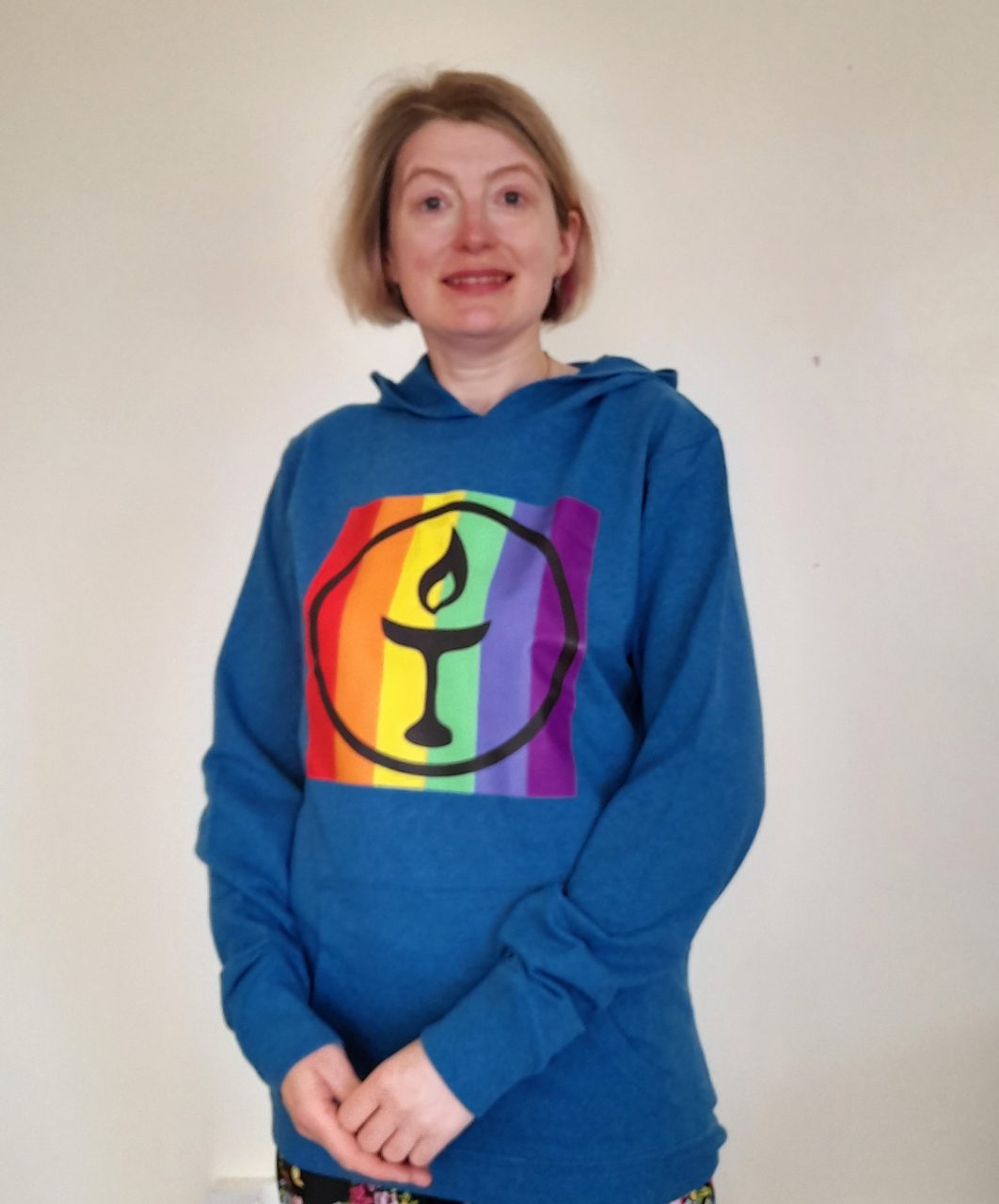 “Yes, this is an unusual one – bringing us right into the modern era of our congregation. We face an interesting future as we look to sell our building, and ponder what sort of congregation we should be. Obviously, we are much smaller than we once were. So are many congregations, Unitarian and otherwise.
Perhaps the biggest challenge we all face is to figure out why we are here. It’s possible to hold Unitarian views – religious and spiritually liberal – without being part of a congregation. What does membership of a congregation add to people’s lives?
I personally believe that it adds fellowship, and a chance to explore together – and hopefully, to take at least some action against the challenges our society faces. Rev. William Turner and Rev. Herbert Barnes were both forthright opponents of slavery and antisemitism. Similarly, our modern Unitarian movement has challenged racism, homophobia, and ableism. Hence the rainbow on our hoodies – to show our support for equality.
Our hoodies exist as a way of showing our commitment to our congregation, and our willingness to go outside this building and proclaim that we are Unitarian, and that All Are Welcome Here. As we move into the future, we affirm our commitment both to preserving our congregation – and to the change necessary to do that.”
[i] Sydney (Sammy) Middlebrook, MA.: ‘Newcastle upon Tyne – Its Growth and Achievement’. Pub. 1950, p.213.
[ii] G. Hague & J. Hague, ‘The Unitarian Heritage – An Architectural Survey’. Pub. 1986, p.110. https://unitarian.org.uk/resources/document-library/unitarian-heritage-architectural-survey
