

James Alexander “Alec” Burns 1907 – 2003
A Unitarian Olympian
Maurice Large writes:
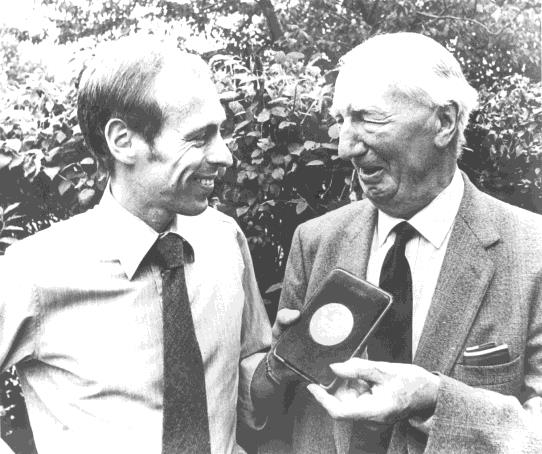
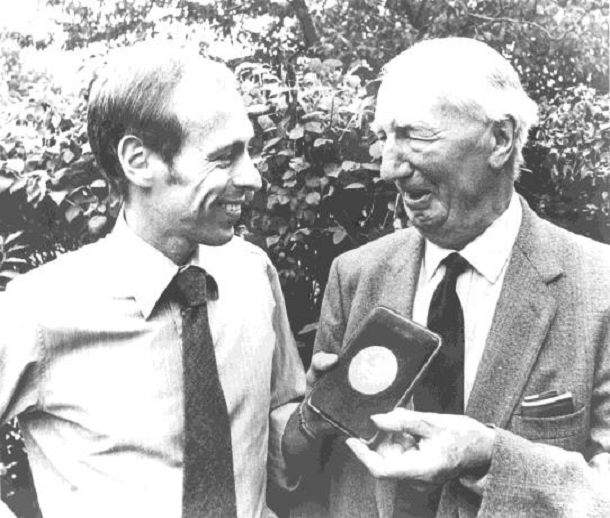
“Alec Burns (often also known as Alex) was a regular attender at the Church of the Divine Unity during the ‘60s and ‘70s and possibly into the ’80s, although I cannot be sure. I only remember him as a tall (he was 6’3’’), craggy man who always sat on the right hand side of the church, about two-thirds of the way to the back. It was a time when communication across the generations was a lot more formal than nowadays and I cannot recall ever saying much more to him than, ‘Good morning’.
He was born in Scotswood on 5th November 1907, the son of a shipyard labourer. He began running for the local YMCA in 1919 before joining the famous Elswick Harriers. In 1928 he showed his potential by winning the annual Saltwell Harriers 10k road race. He won the AAA 4 miles title in 1931 and took second place no less than eight times in the AAA Championships at various distances from three miles to ten miles. He won the English Cross Country Championship in 1932, and represented England six times in the International Cross Country Championships, taking a silver medal in 1934. He also won a bronze in the 1934 British Empire Games. His last race was a Newcastle to Gateshead race in 1972 to raise funds for the 1972 Munich Olympics (an event marred by the terrorist attack on the Israeli team).
But it was as an Olympian that Alec achieved his greatest success. He was selected for the Great Britain team in 1932, during the great depression when, because of financial constraints, only 20 competitors were able to go, and Alec doubled up in the 5000 and 10,000 metres events.
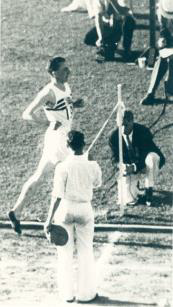
The journey to Los Angeles was not the best preparation. After a train journey to Southampton he embarked with the team on the RMS Empress of Britain for a five-day journey to Quebec (the ship was taking future PM Stanley Baldwin to the Ottawa conference). Their training facilities consisted of runs around the promenade deck, perhaps better than on their journey from Canada to Los Angeles (another five days) on the Santa Fe Railroad where they were limited to training sessions on the platforms of stations when they stopped!
Less than 24 hours after arrival and in sweltering temperatures, Alec found himself running his heat of the 5000 metres. He won easily, but this was an era of Finnish domination of distance running, and he finished fifth in both the 5000 and 10,000 metres finals, setting a new British record in the process. Following the Games, Lord Burghley, the team Captain, took the team on a tour of Los Angeles, including the film studios and the houses of Mary Pickford and Lon Chaney.
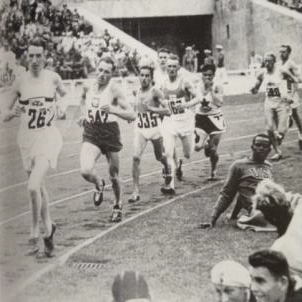
Four years later, Alec was again selected. These were the infamous 1936 Berlin Olympics. When Alec met Adolf Hitler at the athletes’ reception his immediate thought was that Hitler had an inferiority complex. Alec admired the discipline and good health of the German athletes, although the British team were oblivious of the concentration camp that was only 9 miles away from the stadium; at that time knowledge of Hitler’s plans was non-existent.
As in 1932, the Finns were dominant, although Alec finished in 5th place in the 10,000 metres, setting a British record time of 30 mins 58.2 secs in the process. During the Games Alec became friends with Jesse Owen who won four gold medals, so infuriating Hitler that the records were excluded from Goebbels’ newspaper.
After the Games Alec won the Senior Club Championship in 1937 and again in 1938 and finished his career the same year by winning the Northumberland and Durham One Mile Championship. He continued to be involved in promoting Elswick Harriers, but during and after the war, his employment with Anglo American Oil Company left him little time and his day-to-day involvement with athletics gradually died away. By the late 1980s he had lost all interest in first class athletics, explaining, “In my time we ran just for the love of the sport and money or prizes were never a consideration, and the greed for money is why athletics today does not interest me”. As a philosophy for life, that would take some beating.
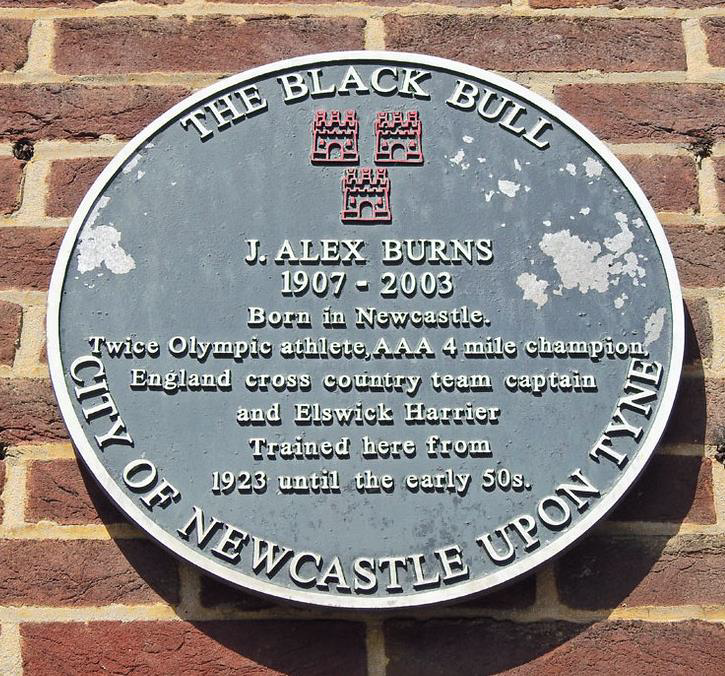
Alec Burns is commemorated with a blue plaque on the wall of the Black Bull public house at the corner of Barrack Road and Stanhope Street, (just past and opposite St James’s Park), where Elswick Harriers had their headquarters. I am hugely indebted to Harry Matthews, the Chairman of Elswick Harriers for most of the information in this article.”
Maurice Large
